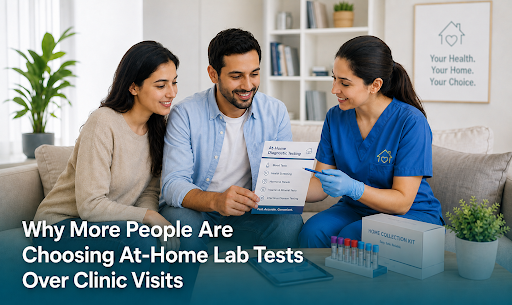
A few years ago, getting a blood test meant clearing your schedule. You would drive to a clinic, find parking, sit in a waiting room with strangers, and hope your name got called before your lunch break ended. Today, a growing number of people are skipping that entire routine in favor of something simpler: a trained phlebotomist arriving at their home or office to draw their sample while they carry on with their day.
This shift is not just a passing trend. It reflects a real change in how people think about their time, their comfort, and their health, and it is why searches for a lab test at home have climbed steadily across the region.
The Convenience Factor Is Hard to Ignore
Life in a busy city rarely leaves room for a two hour detour to a clinic. Between work meetings, school runs, and everything in between, finding a gap for a routine blood test often means putting it off entirely. Many people delay checkups for months simply because the logistics feel like too much effort.
At home testing removes that barrier. A technician comes to your door at a time that suits you, whether that is early morning before work or a weekend afternoon, to carry out a blood test at home with the same equipment and standards used in a clinic. There is no commute, no waiting room, and no rearranging your whole day around a fifteen minute procedure. For working professionals, parents, and elderly individuals with limited mobility, this convenience alone is often the deciding factor.
Privacy and Comfort Matter More Than People Admit
Clinic waiting rooms are public spaces. Sitting there for a hormonal panel, an STD screening, or a fertility test can feel exposing, even when no one else knows why you are there. Some people avoid necessary tests altogether because they are uncomfortable with the idea of being seen at a diagnostic center.
Home testing sidesteps this entirely. The sample is collected in a familiar, private setting, which tends to put people more at ease. This is especially true for an STD test at home or an HIV test at home, where privacy often makes the difference between someone getting tested promptly and someone putting it off out of discomfort. Comfort during a procedure sounds like a small thing, but it often determines whether someone follows through on their health checkup at all.
Better for People Managing Chronic Conditions
For anyone managing diabetes, thyroid issues, or other conditions that require regular monitoring, frequent clinic visits become a real burden over time. What starts as a manageable routine can turn into a source of ongoing stress, especially for elderly patients or those recovering from surgery who find travel physically difficult.
Home sample collection means these individuals can stay on top of their monitoring schedule without the physical toll of repeated clinic trips. Caregivers benefit too, since they no longer need to coordinate transport or take time off work just to accompany a family member to a lab.
Faster Turnaround Without the Wasted Time
A common misconception is that home testing takes longer than a clinic visit. In practice, the opposite is often true. Clinic visits involve travel time, waiting room delays, and sometimes a second visit if the lab is at a different location than the consultation. Home collection cuts out all of these steps. A technician arrives, draws the sample, and the results typically follow on the same or similar timeline as a clinic-based test, since the sample goes to the same accredited lab either way.
For people juggling packed schedules, this time saved adds up. What used to be a half-day commitment becomes a fifteen-minute appointment.
Safety Considerations Continue to Drive Demand
The pandemic changed how people think about medical facilities, and that shift has not fully reversed. Many still prefer to limit unnecessary exposure in shared clinical spaces, particularly those who are immunocompromised, pregnant, or caring for young children. Home testing offers a way to stay on top of health monitoring without stepping into an environment where illness might be circulating.
This is not about avoiding healthcare. It is about accessing it in a way that feels lower risk, especially for routine tests that do not require an in person consultation. A PCR test at home is a good example of this, letting people confirm results without sitting in a shared waiting area while unwell or awaiting confirmation of exposure.
What to Look for in a Home Testing Provider
Not all home testing services are equal, so it is worth checking a few things before booking. Confirm the provider is licensed by the relevant health authority, ask whether the phlebotomist is certified, and check that samples are processed in an accredited laboratory rather than an unregulated facility. Turnaround time, the range of tests offered, and how results are delivered are also worth confirming upfront.
In the UAE, providers like Genex Lab offer DHA-approved home sample collection with a wide panel of tests, from routine blood work and a BHCG test to more specialized screenings, giving people a reliable alternative to the traditional clinic visit.
The Bigger Picture
At-home lab testing is not replacing clinics for everything. Consultations, physical examinations, and procedures still require an in-person visit. But for the routine blood draws and screenings that make up a large share of diagnostic testing, home collection offers a version of healthcare that fits into real life rather than demanding people rearrange their day around it.
As more people experience the difference between a rushed clinic visit and a stress free home appointment, it is easy to see why this shift shows no signs of slowing down.